


 0 Comments

The new gas pipeline connection can provide convenience in cooking and energy use in households, but the application procedure might appear a bit confusing at first. Many people don’t know how to apply for a new gas pipeline connection and which documents will be needed for that purpose.
If you have been asking yourself questions like “How can I get a new gas pipeline connection? What should I do to simplify the process?”, you need to know that the whole process will become much clearer once you know the basic points.
Be it a new construction of a house, replacement of other types of fuel sources, or a gas pipeline connection of a property to an existing natural gas supply system, proper preparation can help avoid any problems in the future.
What Is a Gas Pipeline Connection?
A gas pipeline connection connects your property to a gas supply network. Once the pipeline is installed and approved, gas will be supplied to your building or house via a special regulated system.
Depending on where you live, the service will be provided by either a local gas distribution company, utility provider, or authorized gas supplier. The requirements, fees, installation process, and all the safety measures will differ from one company to another.
Therefore, your first step should be identifying the gas supplier in your area.
Type of Gas Pipeline
| Type of Gas Pipeline | Purpose | Typical Pressure | Common Use |
| Transmission Pipeline | Transports natural gas over long distances from production fields or processing plants. | High | Interstate and regional gas transport. |
| Distribution Pipeline | Delivers gas from transmission networks to residential, commercial, and industrial areas. | Medium to Low | City and local gas supply. |
| Service Pipeline | Connects the main distribution line directly to individual buildings or properties. | Low | Homes, apartments, and small businesses. |
| Gathering Pipeline | Collects raw natural gas from multiple wells and carries it to processing facilities. | Low to Medium | Oil and gas production fields. |
| Feeder Pipeline | Transfers gas from transmission pipelines to distribution networks. | Medium to High | Connecting major supply lines to local systems. |
| Industrial Pipeline | Supplies gas directly to factories, power plants, and large industrial facilities. | Medium to High | Manufacturing plants and energy generation. |
How Can I Get a New Gas Pipeline Connection?
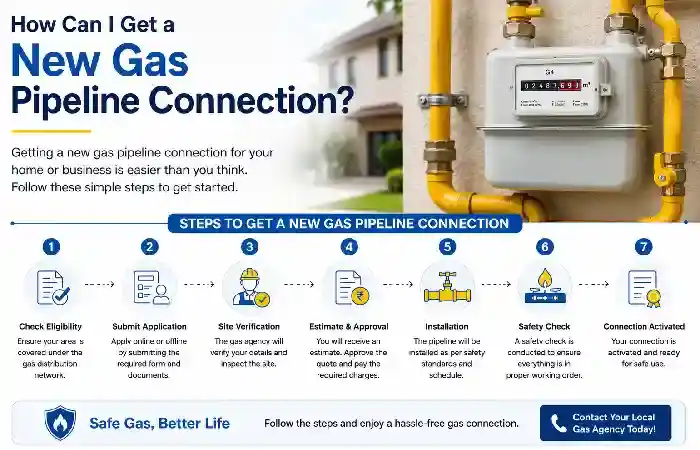
The general process usually involves a number of basic steps. Though each procedure may vary depending on where you live, typically an application includes such steps as checking availability, submitting an application form, providing identification and property documents, undergoing inspection, paying the necessary fees, and installing a meter.
1. Check if There is Gas Service Available in Your Area
Before submitting the application form, check if there is a network of pipelines of the gas provider in your area.
Generally, you can check this via the website, customer service department, or authorized service center of the gas provider. Some providers provide online services through which you can check if your property can be supplied with gas.
The reason why you have to perform this step is the following. If there is no such network in your area, then the establishment of a new connection may take a while since it is impossible to establish the connection if the main pipeline does not go through your area yet.
The gas provider may explain to you why the connection is not established right now and whether it is supposed to do so.
2. Identify the Right Gas Provider
Various gas companies can serve different territories. Therefore, you have to be sure you are dealing with the right gas provider.
Otherwise, this may waste your time and lead to rejection of the application. You need to look for the provider officially responsible for your address, not rely on advertisements or third parties.
The official provider should give you all the information regarding:
- Application process;
- Connection charges;
- Necessary documents;
- Installation requirements;
- Inspection;
- Expected duration;
- Safety rules;
Having this information beforehand will help you greatly.
3. Gather the Necessary Documents
One of the simplest ways to speed up the process of gas installation is preparing all the necessary documents.
Though it may differ in details depending on the provider and your territory, typically it includes documents confirming your identity, address, ownership/lease of property, and application forms.
Additional IDs may be required if you apply for a rented property, building, apartment, or multiple-unit development.
4. Submit Your Application
You may proceed to submit the application to connect the gas pipeline after ensuring the availability and having all the necessary documents in hand.
Utility companies have an online portal available for their customers to apply for a gas pipeline installation in many cases. In contrast, in other cases, you will have to submit the application physically at the customer service center.
Before proceeding with the submission of the application, make sure to double-check all the information written in it.
Some of the critical information required by the utility company in the application includes your name, address, contact number, ID particulars, type of premises, etc. Even a small mistake in the address or contact number may result in scheduling problems for you.
Once you submit the application, it is essential to save the reference number of the application as it may help in future queries regarding the application status.
5. Understand the Connection and Installation Charges
There are various fees involved in the new gas pipeline connection. These fees may include application fee, connection fee, meter fees, installation fee, deposit amount, and any other approved utility charges.
Ask the utility provider for the exact amount of the total charges.
Do not assume that the advertised connection fee is enough to cover all your installation charges. Sometimes, there are a variety of factors that may affect the total cost, which include the following:
- Distance of the property from the existing pipeline
- The layout of the property
- Pipeline length
- Meter location
- Required safety equipment
- Complexity of the installation
- Necessity of excavation
6. Prepare Your Property for Inspection
After accepting the application, the gas company may schedule the inspection.
The technician may inspect in order to confirm the suggested meter location, pipeline pathway, appliance connections, ventilation, accessibility, etc.
It is important for you to ensure that you provide easy access to your property in order to facilitate the inspection process.
If possible, it would be better for you to prepare for it while building or renovating the property. For instance, planning appliance locations will enable you to lay down an efficient pipeline pathway.
Never install or change the infrastructure by yourself.
7. Complete All Necessary Property Work
In some cases, the gas supplier may find out the work that needs to be completed prior to the installation.
For instance, the proposed location of the meter should be accessible, and some structural changes might be needed to meet the safety standards.
It is advisable to inquire what work is needed and who should complete it in accordance with the supplier’s regulations.
8. Book the Date of Gas Pipeline Installation
After completing all the stages above, the supplier can schedule the date of installation of your property.
Installation usually presupposes connection to the pipeline network, installation of the appropriate meter and pipes, and safety testing of the system.
This stage may vary depending on the design of the property and the standards of the utility company.
Just make sure you are present during the appointment or allow an adult representative of the property to be present, if needed.
How Can You Make the Process Easier?
There is no need to experience stress when applying for a gas connection. A few simple recommendations will help simplify the whole procedure and make the communication with the provider much easier.
Check the Requirements Before Application
Never start filling out the application form without checking the current requirements of the provider first. Create a simple list of all the documentation, payment, and other conditions that will be required.
This measure will help to avoid extra visits or resubmissions of the documents.
Contact the Provider Only Through Official Channels
Always apply to the official provider for obtaining the gas connection services. The official website, customer center, and customer support service are the most reliable channels for receiving information on how to fill out an application form and pay for it.
Be careful of those who promise to obtain a gas connection too quickly for unofficial money.
Keep All Your Contact Data Up-to-Date
The utilities may use phone calls, SMS messages, email, and even an online portal for communicating with the customers in relation to the inspection and installation.
It is important to keep your phone number and email up to date.
Keep All the Paperwork
Always keep all the paperwork related to the application, payment confirmation, report of inspection, and other correspondence with the gas provider.
It will be very helpful if something goes wrong with your application.
Get All Answers Before Your Install Day
If you have doubts about the location of the meter, pipeline path, list of your appliances, or the installation process, contact the provider before the arrival of the technician.
It will help you prevent any surprises and get prepared for the upcoming installation.
What Gas Appliances Will Use a Gas Pipeline?
According to the type of gas supply and local regulations, the household gas pipeline can be used for supplying gas to cooking stoves, boilers, water heaters, furnaces, or other gas appliances.
All your appliances must be compatible with the supplied gas.
Do not connect an appliance to the pipeline before checking its compatibility with the supplied type of gas and its pressure. Only professional installation of appliances prevents dangerous situations.
Safety Tips to Follow When Installing a Gas Pipeline
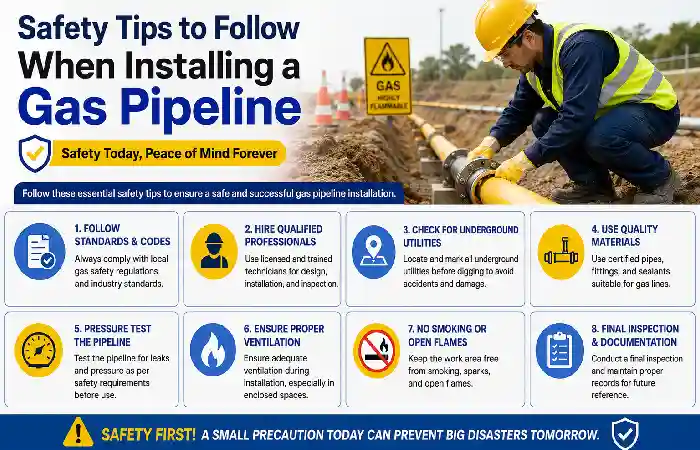
When working with gas pipelines, safety should come first.
Do not attempt to repair, expand, or move gas pipelines on your own. Do not obstruct ventilation passages or affect safety equipment.
In case you smell gas, hear hissing sounds, find damaged pipes, or suspect any leaks, do not make flames or sparks and follow your gas provider’s instructions in such situations.
You should leave the area if needed and call for professional help from appropriate authorities.
Gas appliances must also be checked regularly and maintained following the manufacturer’s recommendations and local regulations.
How Long Does It Take to Install a Gas Connection?
There is no single timeline for a gas pipeline connection.
It all depends on such factors as the presence of the gas main near your property, speed of document processing, need for an inspection, complexity of installation, and the availability of technicians.
The connection can take less time in areas with existing infrastructure than in those where you need some extra work with the gas network.
When applying for the pipeline, ask the provider for the expected timeline and potential delays.
What If Your Application Is Delayed?
If you think the process is taking too much time, check the status of your application based on the application or reference number first.
You need to contact the respective authority and find out if there are any documents, payments, inspections, and property requirements left pending.
Having a record of all the communication is helpful when you have to escalate an issue.
Never submit new applications for the same property unless told to do so by the provider.
Final Thoughts
Now that I have gone through the entire process, how can I connect to a new gas pipeline?
The best thing you can do is to be prepared before applying.
Make sure you know if the gas services are available in your locality and who the right provider is.
Also, gather all the necessary documents and get the cost details, along with preparing your property for inspection and hiring only authorized professionals for the installation.
But most importantly, always consider gas installation to be something very critical and important for the safety of your property and people living in it.
As the connection requirements of gas change from place to place, always verify the procedure, charges, installation requirements, and safety guidelines from the local authorized gas provider.